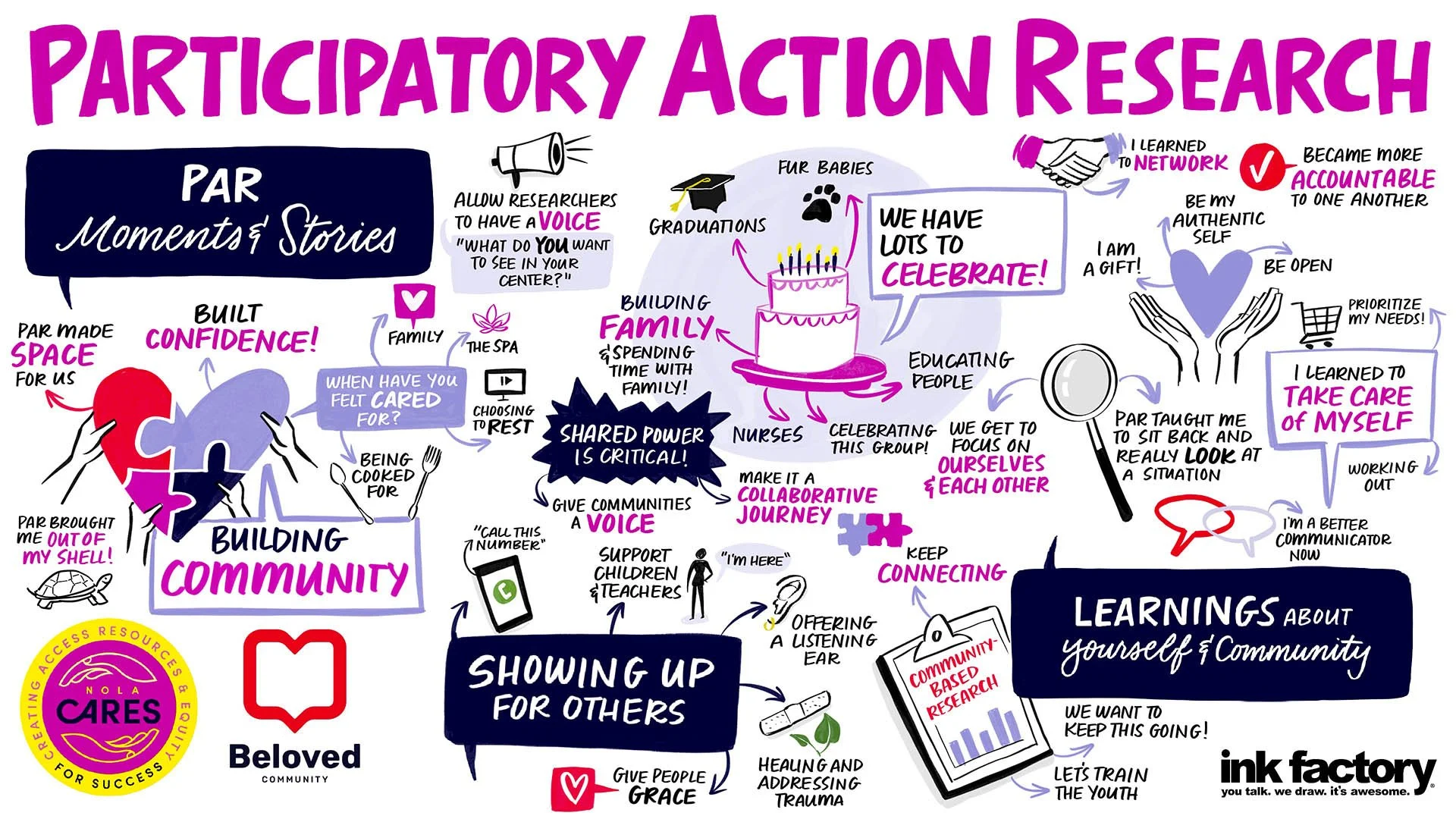
What happens when frontline workers have a voice in policy advocacy? This Participatory Action Research (PAR) model with ECE workers explores just that.
In collaboration with our evaluation team at Ampersand and Dr. Nnenna Odim, Associate Director of PAR for NOLA C.A.R.E.S., this evaluation brief explores the relationship between PAR, power, and policy. Participatory Action Research (PAR) uses a powerful method to bring concerns and evidence from those most impacted to the attention of those in a position to effect change. Ideally, those in power – whether in elected or other leadership positions– commit to hear these findings, act upon them, and “close the circle” with the organizations and community members who shared the evidence, analysis and understanding.
We explore questions like:
Whose knowledge and power inform and impact policy advocacy?
What shifts in accountability when we incorporate PAR meaningfully in Policy?
Who is responsible to communities?
This report and related activities were made possible through generous support ofJP Morgan Chase - Advancing Cities.

Download your FREE copy of Participatory Action Research and Policy Change
This brief aims to:
Highlight the recommendations for how community members and policy makers can work effectively for community-driven policy change
Inform how backbone organizations integrate different forms of power for collective impact
Share examples of increased agency for community engaged researchers